
Wi-Fi vs. Cellular: The Invisible War Inside Your Phone
March 6, 2026
Wi-Fi vs. Cellular: The Secret War Inside Your Phone
Your phone is constantly playing referee between two networks that both want to carry your data—and you’ve probably never noticed.
Right now, as you read this, there’s a quiet battle happening in your pocket. Two competitors are locked in an endless struggle for the privilege of delivering your Instagram scroll, your WhatsApp messages, your video calls. Your phone is the arena. Your data is the prize. And the referee making split-second decisions? That’s your phone too, switching between networks dozens of times a day without ever asking your permission.
This is the invisible war between Wi-Fi and cellular, and understanding it will change how you think about every connection you make.
Meet the Competitors
Let’s introduce our fighters, because they could not be more different.
In the red corner: Wi-Fi. The homebody. The local hero. Wi-Fi lives in your house, your office, your favorite coffee shop. It broadcasts from a router sitting maybe thirty feet away at most. It’s your personal delivery driver who knows exactly where you live and can knock on your door in seconds.
In the blue corner: Cellular. The road warrior. The wide-area champion. Cellular doesn’t care where you are—it’s everywhere. Towers dot the landscape like silent sentinels, handing your data off to each other as you move through cities, suburbs, and highways. It’s the delivery service with a massive network covering entire countries.
Both want the same thing: to carry your data. But their fighting styles? Completely different.
The Home Game vs. The Away Game
Here’s the first thing to understand: Wi-Fi and cellular are built on fundamentally different philosophies.
Wi-Fi is hyperlocal. Your router sits in your living room, broadcasting a signal that might reach your backyard if you’re lucky. When you connect to Wi-Fi, you’re hitching a ride on a connection that starts and ends in your immediate vicinity. Your router talks to your phone, then passes your traffic to your internet service provider through a physical cable.
Cellular, on the other hand, is built for movement. Those towers you sometimes spot on rooftops or hilltops? They’re connected to a massive, interconnected network designed to follow you wherever you go. Drive from Nairobi to Mombasa, and your phone will hand off from tower to tower to tower, never missing a beat.
Think of it like two delivery services. Wi-Fi is the neighbour kid on a bicycle—he’s fast for local deliveries, knows every shortcut on your block, but can’t take your package beyond the neighbourhood. Cellular is the fleet of trucks with a nationwide network—they can get your package anywhere, but there’s more infrastructure involved, more distance to cover.

The Spectrum Battle: Private Lanes vs. Public Roads
Now we get to something that explains a lot about why these two networks behave so differently. It’s all about spectrum—those invisible radio waves carrying your data through the air.
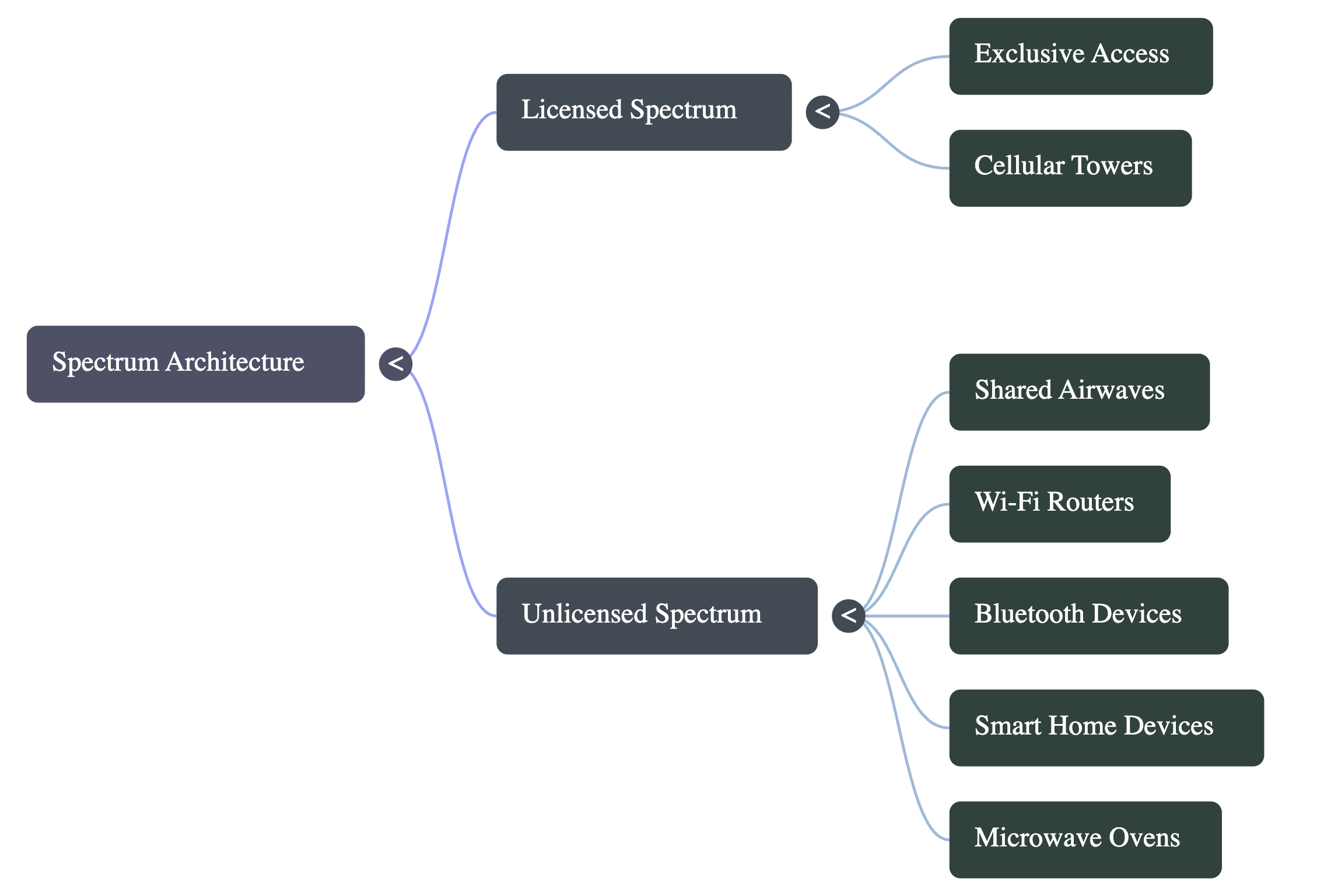
Cellular companies pay billions for exclusive rights to certain frequencies. They’re buying private lanes on the information highway—lanes no one else can use. When your phone connects to cellular, it’s entering a carefully managed, government-regulated space where only licensed operators are allowed. Less interference, more predictability, but enormous costs that get passed down to… well, to you.
Wi-Fi operates on unlicensed spectrum. Anyone can use it. Your router, your neighbour’s router, your microwave (yes, really), baby monitors, Bluetooth devices—all of them are sharing the same public road. It’s free to use, which is why Wi-Fi is everywhere and costs nothing extra, but it’s also chaotic. You’re fighting for space with every other device in range.
This fundamental difference shapes everything. Cellular charges you because cellular paid for the privilege. Wi-Fi is “free” because nobody owns the airwaves it uses—they’re the public park of the radio spectrum.
The Invisible Referee
Here’s where it gets interesting. Your phone is constantly making decisions about which network to use, and it happens so smoothly you’d never notice.
You walk into your house, and your phone silently disconnects from cellular and latches onto Wi-Fi. You start a video call at a café, then get in your car and drive away—your phone seamlessly hands the call off to cellular without you ever hearing a stutter or seeing a glitch.
This is network switching, and it’s happening all the time. Your phone is running a constant background calculation:
How strong is the Wi-Fi signal?
How fast is it actually performing?
How’s the cellular connection looking?
What’s the battery situation?
Is the user roaming?
What kind of data is being transmitted?
Hundreds of times a day, your phone weighs these factors and makes a call. It’s a referee in a match that never ends, and the competitors don’t even know they’re playing.
When the Referee Blows the Call
But here’s the thing—sometimes your phone makes terrible decisions.
You’ve experienced this. You’re at the edge of your Wi-Fi range, maybe sitting on your porch or in a back bedroom, and your internet crawls. Pages take forever to load. Videos buffer. But your phone stubbornly stays on Wi-Fi because technically, it’s still connected. The referee sees the Wi-Fi signal and says, “Good enough!”—even though cellular would be five times faster.
This is the “sticky Wi-Fi” problem, and it’s maddening. Your phone is designed to prefer Wi-Fi because it’s usually faster and doesn’t cost you data. But sometimes that preference backfires. Your phone is being too loyal to a connection that’s no longer serving you well.
The opposite happens too. Ever been somewhere with terrible cellular reception but a perfectly good Wi-Fi network your phone refuses to remember? Or been charged for roaming data when you thought you were on Wi-Fi? Your phone’s decision-making isn’t perfect, and the rules it follows were written by people trying to balance competing priorities.
The Cost of Connectivity
Let’s talk about money, because this is where the competition gets real for most of us.
Wi-Fi, for all practical purposes, is free. Once you’ve paid for home internet, every device on your Wi-Fi is using that connection at no extra charge. Stream 4K video for six hours? No problem. Download a 50GB game? Go for it. Your internet bill stays the same.
Cellular plays by different rules. Most mobile plans have data caps, and exceeding them means either throttled speeds or extra charges. Cellular operators paid dearly for their exclusive spectrum, and they need to recoup that investment.
This cost difference creates a massive incentive for your phone to prefer Wi-Fi. The operating systems running on iOS and Android are tuned to offload as much traffic as possible to Wi-Fi because carriers asked for it and because it saves you money. Your phone is literally programmed to be cheap on your behalf.
But this creates weird behaviors. Your phone might wait to download a software update until you’re on Wi-Fi, even if cellular would finish the job faster. Background sync tasks get queued up. Video quality gets throttled on cellular by default—all because someone decided Wi-Fi is “free” and cellular is “expensive.”
The Future: Both Fighters Are Getting Stronger
This competition isn’t static. Both Wi-Fi and cellular are evolving, and the balance of power keeps shifting.
5G is changing the cellular game. The newest cellular technology isn’t just about faster speeds—it’s about capacity, latency, and reliability. 5G networks can handle far more devices simultaneously, respond faster to requests, and in some configurations, approach Wi-Fi-level speeds. Suddenly, cellular isn’t the “inferior but available everywhere” option. It’s becoming a legitimate competitor even in your living room.
Wi-Fi 6 and Wi-Fi 7 are fighting back. These newer Wi-Fi standards are designed for a world where every device in your home is connected. Better handling of multiple devices, improved performance in crowded areas, faster speeds overall. Wi-Fi isn’t sitting still—it’s evolving to maintain its dominance in the spaces it controls.
The line between these two is also blurring. Some carriers now offer “Wi-Fi calling” that seamlessly routes voice calls over whatever network is available. Hotspot features let your phone share its cellular connection as if it were a Wi-Fi router. The competitors are learning each other’s moves.
Why This Matters
Understanding this invisible war changes how you think about connectivity.
When your phone refuses to switch to a faster network, you know why now—it’s following rules written by engineers trying to balance competing goals, and sometimes those rules don’t fit your specific situation. When you’re troubleshooting a slow connection, you have more tools: toggle Wi-Fi off and on, force a network switch, or simply move closer to the router.
More importantly, you understand the trade-offs being made on your behalf every day. The convenience of automatic switching comes with occasional bad decisions. The preference for Wi-Fi saves you money but can leave you stranded on weak connections. The cost of cellular reflects real infrastructure investments in licensed spectrum.
Now You Know
Your phone is constantly playing referee between two networks that both want to carry your data. Wi-Fi, the local champion, fast and free but limited in range. Cellular, the everywhere network, ubiquitous but metered. They compete, they cooperate, and sometimes they trip over each other.
But the real star of this show isn’t either network—it’s the silent referee in your pocket, making split-second decisions that shape your digital experience hundreds of times a day. Decisions about speed, cost, reliability, and convenience. Decisions you never see but feel every time you load a webpage or start a video call.
The next time your internet feels slow, and you toggle Wi-Fi off and suddenly everything works better, you’ll know exactly what happened. You just overruled the referee.
This is the invisible infrastructure of modern life—systems working so seamlessly we forget they exist, until they don’t.